
If your swimming pool seems to be losing water faster than usual, don’t automatically assume it’s evaporation.
In Southwest Florida, some pool water loss is normal. Heat, wind, humidity, water features, and everyday pool use can all affect your water level. But if you’re constantly adding water to your pool, noticing wet areas around the equipment, or seeing your water level drop significantly from one day to the next, you may have a pool leak.
A small pool leak can become a much bigger problem if it goes undetected. Water loss can affect your pool’s chemistry, put additional strain on equipment, increase water usage, and potentially cause damage around the pool or equipment area.
For homeowners in Cape Coral, Fort Myers, Sanibel, Captiva, Fort Myers Beach, Estero, and Bonita Springs, here are seven signs that it may be time to have your pool inspected for a leak.
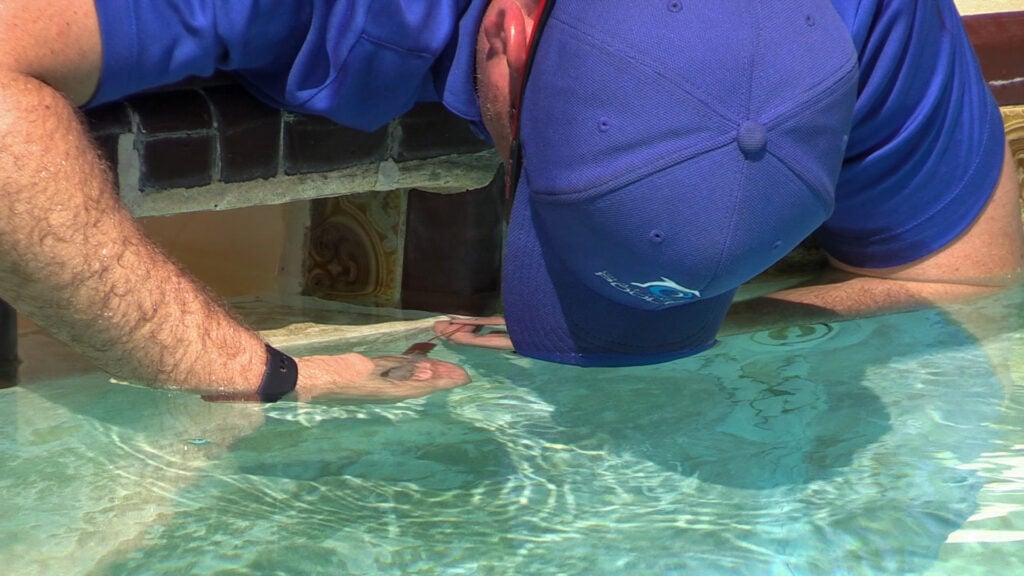
1. Your Pool Water Level Keeps Dropping
The most obvious sign of a swimming pool leak is unexplained water loss.
If you’re adding water to your pool more frequently than normal, pay attention to how quickly the water level drops. While some evaporation is expected in Florida, a consistent or significant drop in water level may indicate a leak.
One simple way to investigate water loss is to compare your pool’s water level to the water level in a bucket placed near the pool. If the pool loses noticeably more water than the bucket over the same period, there may be a leak.
However, this test is only an initial indicator. It cannot tell you where a leak is located or whether the problem is coming from the pool structure, plumbing, equipment, or another component.
2. You’re Constantly Adding Water to the Pool
If you’re filling your pool more often than you normally do, don’t ignore it.
Constantly adding water can be a sign of a pool plumbing leak, equipment leak, structural leak, or leak around a pool feature.
It can also create another problem: repeatedly adding fresh water can change the pool’s chemistry and make it more difficult to maintain proper chemical balance.
If your pool service routine hasn’t changed but your water loss has, it’s worth having the system inspected.
3. You Notice Wet or Soggy Areas Around the Pool Equipment
Take a look at your pool equipment pad.
Unexpected standing water, consistently wet areas, or water collecting around the pump, filter, heater, valves, or plumbing connections can indicate an equipment or plumbing leak.
Not every wet spot means you have a major underground plumbing leak. A worn seal, loose connection, damaged valve, or equipment component can also cause water to escape.
The important thing is to identify the source before the problem gets worse.
4. Your Pool Equipment Is Running Differently
A leak can sometimes show up as an equipment problem before you notice the water loss.
If your pump is losing prime, your water circulation seems weaker than normal, or your equipment is behaving differently, there may be an issue somewhere in the pool’s circulation system.
Pool equipment problems can have many causes, so a professional inspection is important before assuming that a leak is responsible.
5. Your Pool Chemistry Is Suddenly Difficult to Maintain
A pool that is constantly losing water is also losing treated water.
When fresh water is continually added to replace lost pool water, your chemical balance can change. You may notice that chlorine levels, stabilizer, salt, or other chemistry measurements are becoming more difficult to maintain.
If your pool chemistry suddenly seems inconsistent despite regular service and normal pool use, unexplained water loss is worth investigating.
6. You Notice Cracks, Damp Areas, or Unusual Water Around the Pool
Visible cracks or consistently damp areas around the pool deck, pool shell, plumbing penetrations, or other pool structures can be warning signs.
Leaks don’t always occur in an obvious location. Water may travel away from the actual source before becoming visible.
This is especially important with underground plumbing. A leak in a buried line may not produce an obvious puddle directly above the damaged pipe.
If you see unexplained moisture around your pool, don’t assume it’s simply from normal swimming or recent rain.
7. Your Pool Is Losing Water Even When Nobody Is Using It
One of the easiest ways to identify unusual water loss is to monitor your pool when it isn’t being used.
If the pool continues losing water while the pool is not being used, there are no water features operating, and weather conditions aren’t causing unusually high evaporation, a leak becomes more likely.
This is a good reason to pay attention to your pool’s normal water level. Homeowners who know what is normal for their pool can spot changes much earlier.
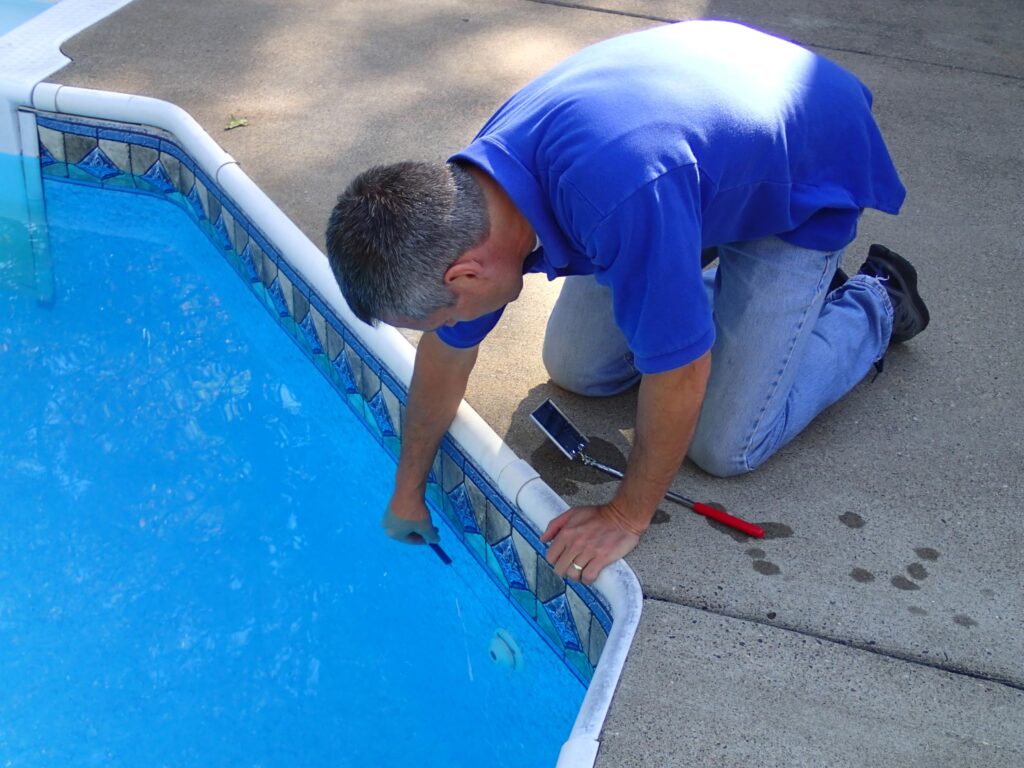
How Much Pool Water Loss Is Normal in Florida?
This is where things can get confusing.
Florida pools naturally lose water through evaporation. The amount varies based on temperature, wind, humidity, pool size, water features, and whether the pool is covered.
The Southwest Florida Water Management District notes that uncovered Florida pools can lose approximately ⅛ to ¼ inch of water per day from evaporation, depending on conditions and water features.
That means seeing some water loss does not automatically mean your pool has a leak.
The concern is when water loss is greater than what is normal for your pool or suddenly changes from your usual pattern.
When in doubt, testing the pool for a leak is a better approach than continually adding water and hoping the problem goes away.
What Causes Swimming Pool Leaks?
Pool leaks can originate in several different areas of the system.
Common sources include:
- Pool plumbing and underground pipes
- Pump and filter connections
- Valves and fittings
- Pool equipment
- Skimmers
- Return lines
- Pool lights and other penetrations
- Cracks in the pool structure
- Water features
- Automatic fill systems
Finding the source is often more difficult than simply noticing that the pool is losing water.
That’s why pool leak detection should focus on identifying where the water is escaping rather than simply treating the symptom.
When Should You Call for Pool Leak Repair?
If your pool is consistently losing more water than normal, it’s better to investigate the problem early.
A small leak may seem like nothing more than an inconvenience at first. But continued water loss can lead to additional maintenance problems and potentially more expensive repairs.
If you’ve noticed unexplained water loss, wet areas around your pool equipment, changes in circulation, or other signs of a swimming pool leak, a professional pool inspection can help determine what is happening.
Pool Leak Detection & Repair in Southwest Florida
Pool Executives provides pool equipment repair and maintenance for residential and commercial pools throughout Southwest Florida.
Our repair specialists diagnose problems involving pumps, circulation systems, filters, plumbing concerns, valves, heaters, automation, and other pool equipment.
We serve homeowners and properties throughout Cape Coral, Fort Myers, Fort Myers Beach, Sanibel, Captiva, Estero, Bonita Springs, and surrounding Southwest Florida communities.
If your pool is losing water and you aren’t sure why, don’t keep guessing. Identifying the source of the problem early can help prevent a small pool repair from becoming a much larger issue.
Need help with a pool leak or other pool repair? Contact Pool Executives to schedule an inspection.
Call 239-542-2421 or request service online.